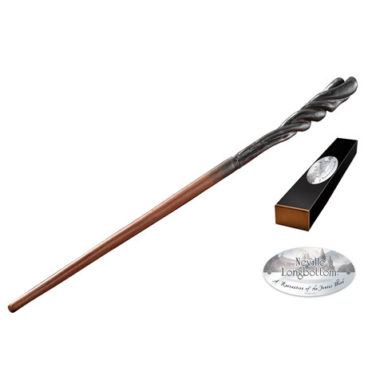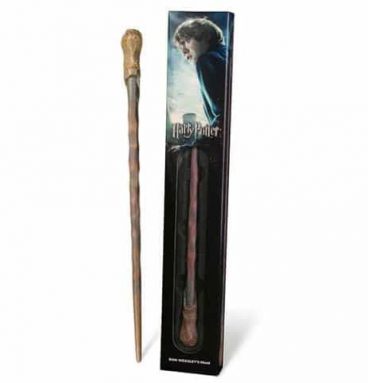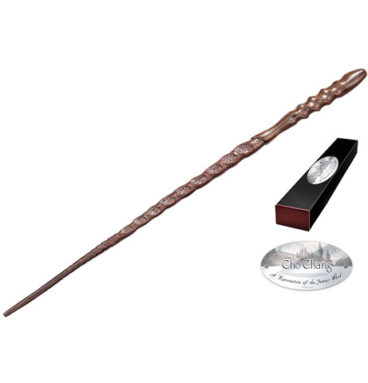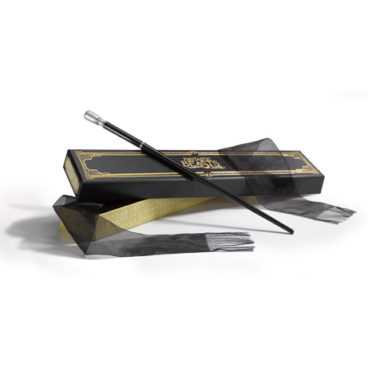


Description
Baguette de Pius Thicknesse :
- Fonctionnaire au Ministère de la Magie
- Il succède à Amelia Bones à la Direction du Département de la justice magique
- Le Mangemort Yaxley lui inflige un sortilège de l’Imperium pour qu’il se joigne au camp de Lord Voldemort
- Il devient Ministre de la Magie après l’assassinat de Rufus Scrimgeour
- Il participera à la Bataille des 7 Potter pour attraper le vrai Harry
- Lors de la Bataille de Poudlard, il est terrassé par Percy et Arthur Weasley.

How Football Betting Odds Work According to Betzoid Analysis
Football betting has evolved from informal wagers between friends into a sophisticated, multi-billion-dollar global industry. At the heart of this industry lies a concept that confuses many newcomers and even experienced bettors: odds. Understanding how football betting odds work is not merely a matter of curiosity — it is an essential skill for anyone who wants to engage with sports betting in a thoughtful, informed way. Odds determine how much a bettor stands to win, reflect the probability of various outcomes, and ultimately reveal how bookmakers structure their profit margins. Without a firm grasp of odds, placing a football bet is little more than guesswork.
The Foundations of Football Betting Odds
Football betting odds are numerical representations of the likelihood of a specific outcome occurring in a match. They serve a dual purpose: they communicate probability and they determine the payout a bettor receives if their selection is correct. The three most widely used formats are decimal odds, fractional odds, and American (moneyline) odds, each presenting the same underlying information in a different mathematical structure.
Decimal odds, which are dominant across Europe, Australia, and most online betting platforms, are arguably the most straightforward. A decimal odd of 2.50 on a team winning means that for every unit staked, the bettor receives 2.50 units in return, including the original stake. The implied probability is calculated by dividing 1 by the decimal figure — in this case, 1 ÷ 2.50 = 0.40, or 40%. Fractional odds, traditionally used in the United Kingdom and Ireland, express the profit relative to the stake. Odds of 3/2, for example, mean a bettor wins three units for every two units wagered. American odds operate differently, using positive and negative numbers to indicate underdogs and favorites respectively, with the figures showing how much one must bet to win $100 or how much $100 wins.
Regardless of the format, all odds formats share one critical characteristic: they are set by bookmakers to reflect perceived probabilities while ensuring a built-in margin. This margin, commonly referred to as the « vig, » « juice, » or « overround, » is how bookmakers guarantee profitability over time. When the implied probabilities of all possible outcomes in a match are added together, they always exceed 100%, and that excess represents the bookmaker’s edge. In a standard three-outcome football market — home win, draw, away win — the overround typically ranges between 5% and 10% for major leagues, though it can be considerably higher for less competitive markets.
How Bookmakers Set and Adjust Football Odds
The process of setting football odds is far more complex than simply calculating statistical probabilities. Modern bookmakers employ teams of highly trained analysts, statisticians, and traders who combine quantitative modeling with qualitative judgment to produce opening lines. These initial odds are informed by a wide range of data points, including recent form, head-to-head records, squad injuries, home and away performance metrics, tactical tendencies, and even weather conditions for outdoor stadiums.
Once the opening odds are published, they are rarely static. Bookmakers continuously monitor betting patterns and adjust their lines in response to incoming wagers. If a large volume of money floods in on one outcome, the bookmaker will shorten the odds on that selection to reduce liability and lengthen the odds on the opposing outcomes to attract balancing action. This process of dynamic adjustment means that odds at the time of kickoff can differ substantially from those available days or even hours earlier. Sharp bettors — those with demonstrated long-term profitability — often trigger faster and more significant line movements than recreational bettors, and bookmakers track these patterns closely.
Market forces also play a significant role. The global football betting market is highly interconnected, with major operators watching each other’s lines and adjusting accordingly. For bettors seeking analytical frameworks to interpret these movements, resources such as https://betzoid.net/ offer structured evaluations of odds across multiple markets, helping users understand not just what the odds are, but why they move and what those movements might imply about underlying value. This kind of contextual analysis is invaluable for developing a more sophisticated approach to football betting.
It is also worth noting that different bookmakers will offer slightly different odds on the same event, a phenomenon known as price variation. This variation exists because each operator has its own risk management strategy, customer base, and exposure limits. Experienced bettors exploit these discrepancies through a practice called line shopping — systematically comparing odds across multiple platforms to find the best available price on a given selection. Over time, even marginal improvements in the odds obtained can have a meaningful impact on overall returns.
Probability, Value, and the Mathematics Behind the Odds
One of the most important concepts in football betting, and one that separates disciplined bettors from casual gamblers, is the notion of expected value. A bet has positive expected value when the probability of a given outcome, as assessed by the bettor, is higher than the probability implied by the bookmaker’s odds. In mathematical terms, expected value (EV) is calculated as: EV = (Probability of Winning × Profit) − (Probability of Losing × Stake). A positive EV bet does not guarantee a win on any individual occasion, but it indicates that the bet is theoretically profitable if placed repeatedly under similar conditions.
To identify value, a bettor must develop their own probability estimates and compare them against the bookmaker’s implied probabilities. This requires not only statistical literacy but also a deep understanding of the specific factors that influence football outcomes. Team news, for instance, can dramatically alter the probability distribution of a match result. The absence of a key striker or defensive midfielder may not be fully priced into the odds, especially if the information becomes public shortly before kickoff. Similarly, motivation levels — particularly relevant in end-of-season fixtures where one team has nothing to play for — can create pricing inefficiencies that attentive bettors can exploit.
Historical data plays a crucial role in building probability models. Analysts examining decades of league football data have identified numerous statistically significant patterns, including home advantage effects (which have declined in recent years, particularly following the COVID-19 pandemic’s behind-closed-doors matches), the predictive power of expected goals (xG) metrics over raw scorelines, and the tendency for draw rates to be underestimated in certain match contexts. Betzoid’s analytical approach emphasizes the importance of grounding probability assessments in robust historical evidence rather than relying on surface-level narratives or recency bias.
Asian handicap betting deserves particular mention in any serious discussion of football odds. Unlike traditional three-way markets, Asian handicap eliminates the draw by applying a goal handicap to one or both teams, creating a two-outcome market. This format is popular among sophisticated bettors because it reduces the bookmaker’s overround and offers more nuanced ways to bet on match outcomes. Quarter-ball and half-ball handicaps introduce further granularity, allowing bettors to split stakes across adjacent handicap lines. Understanding how handicaps interact with odds is an advanced skill that reflects a deeper comprehension of probability and market mechanics.
Common Misconceptions and Analytical Best Practices
Despite the wealth of information available about football betting odds, several persistent misconceptions continue to mislead bettors. One of the most common is the gambler’s fallacy — the belief that past outcomes influence future independent events. In football betting, this might manifest as the assumption that a team is « due » a win after a long losing streak, or that a goalkeeper who has conceded several goals recently is more likely to keep a clean sheet. Each match is a distinct event influenced by its own set of variables, and historical sequences do not alter the fundamental probabilities in the way the gambler’s fallacy suggests.
Another widespread misconception is that high odds necessarily represent good value. A selection priced at 10.00 (implying a 10% probability) is not inherently attractive simply because of the large potential return. The question is whether the true probability of that outcome exceeds 10%. If the genuine likelihood is only 7%, the bet has negative expected value despite its apparent appeal. Conversely, a heavily favored team priced at 1.30 might represent excellent value if the bettor’s analysis suggests the true probability of a win is closer to 85% rather than the implied 77%.
Betzoid’s analytical methodology consistently emphasizes the importance of record-keeping and performance tracking. Bettors who maintain detailed logs of their wagers — recording the odds obtained, the implied probabilities, their own estimated probabilities, and the outcomes — are in a position to evaluate whether they are genuinely identifying value or simply experiencing variance. Without this discipline, it is impossible to distinguish skill from luck over any meaningful sample size. The standard recommendation among professional bettors is to maintain records across a minimum of several hundred bets before drawing conclusions about edge and profitability.
Bankroll management is the final pillar of a sound analytical approach. Even a bettor with a genuine edge will face periods of losing runs due to the inherent variance in football outcomes. Staking too large a proportion of one’s bankroll on any single bet — regardless of perceived confidence — exposes the bettor to ruin risk. The Kelly Criterion, a mathematically derived staking formula, suggests that the optimal bet size is proportional to the edge divided by the odds. In practice, many professional bettors use a fractional Kelly approach, staking between 25% and 50% of the full Kelly amount to reduce volatility while still capitalizing on identified value.
Understanding football betting odds is ultimately an exercise in applied probability and critical thinking. The odds displayed on any betting platform are not simply numbers — they are the product of complex modeling, market dynamics, and commercial considerations. Recognizing this complexity is the first step toward engaging with football betting in a genuinely analytical way.
Conclusion
Football betting odds are a sophisticated language that communicates probability, risk, and potential reward simultaneously. From the mathematical structures of decimal and fractional formats to the dynamic movements driven by market forces and sharp money, odds reflect a continuous negotiation between bookmakers and bettors over the true likelihood of outcomes. Developing a genuine understanding of how odds are constructed, how they move, and how to identify situations where they may misrepresent true probabilities is the foundation of any serious approach to football betting. The analytical frameworks offered by platforms like Betzoid provide valuable tools for navigating this complexity, but ultimately, disciplined thinking, rigorous record-keeping, and sound bankroll management remain the defining characteristics of informed, responsible engagement with football betting markets.


Avis
Il n’y a pas encore d’avis.